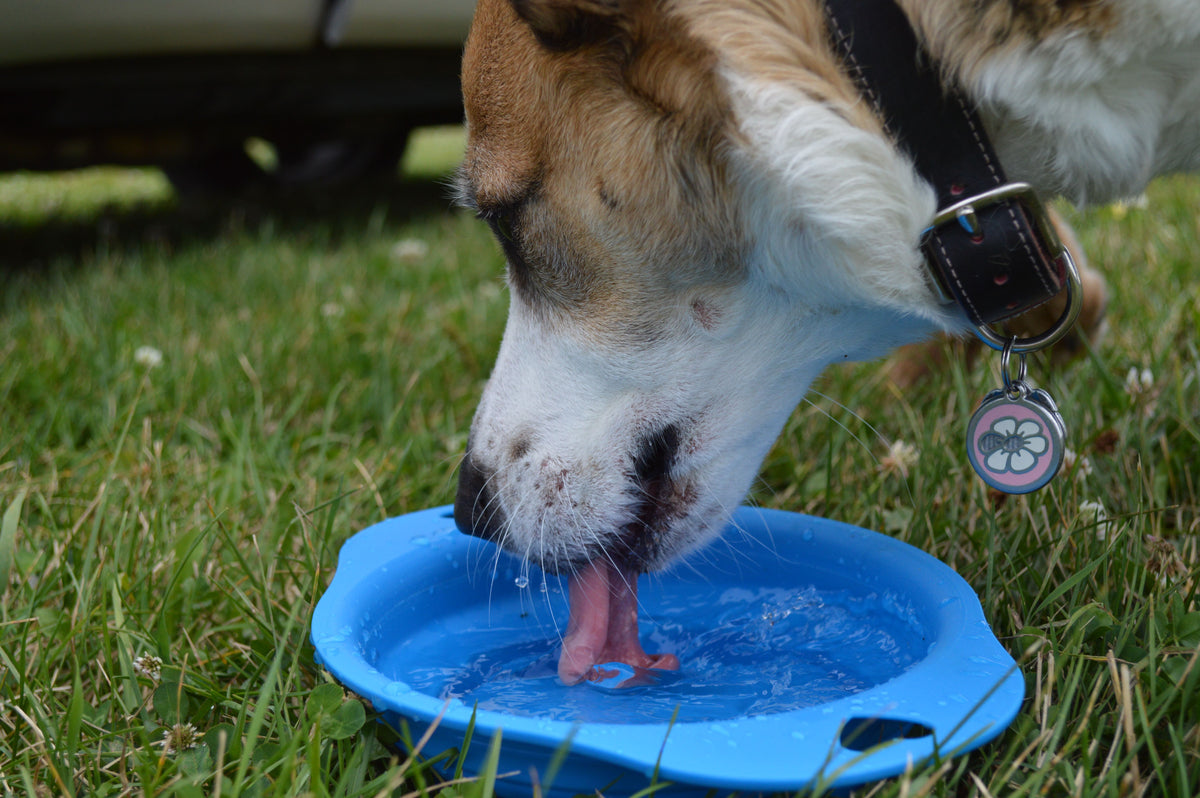
- A dog drinks more when it is hot, after exercise or if he eats dry kibble. That is not a concern if it stays occasional.
- Thirst that rises for a sustained period, often with more urine, should be reported to the vet. Vets call it polyuria and polydipsia.
- In dogs, the usual causes are chronic kidney disease, diabetes and Cushing's syndrome. There are more than thirty in all.
- In an unspayed bitch, sudden thirst a few weeks after a season can reveal pyometra, an infection of the womb that is an emergency.
- Never restrict the water of a dog who drinks a lot without a vet's advice: he could become dehydrated.
Are you filling the water bowl far more often than before, does your dog wake you at night to go out, or is he having accidents in the house when he used to be clean? Rising thirst is a discreet but important sign. It may have a simple explanation, such as the heat. It may also reveal an illness that is all the easier to treat the earlier it is spotted. This guide helps you assess how much your dog drinks and know when to see the vet.
How much should a dog drink?
The amount of water a dog needs varies with his weight, diet, activity and the temperature. In a continuing-education article published in 2023, the veterinary specialist Sarah Schmid sets out the thresholds vets use: we speak of polydipsia, excessive thirst, above 100 mL of water per kilo per day[1]. For a 10 kg dog, that threshold is more than a litre of water a day.
She points out, however, that water intake differs widely between individuals, and that a dog can drink abnormally more than usual without crossing this threshold[1]. The deciding factor is therefore the change from his usual habits.
Measuring how much your dog drinks
If you are in any doubt, measure his intake over 24 hours:
- fill his bowl with a known amount of water, measured with a measuring jug;
- top it up during the day if needed, noting each addition;
- the next day at the same time, measure what is left and work out how much he has drunk;
- repeat for two or three days, allowing for water drunk outdoors.
If other animals share the bowl, measuring is harder: simply note down what you observe. These figures will be very useful to your vet.
Normal reasons for increased thirst
- heat: the dog cools himself by panting, which makes him lose water;
- exercise: a long walk, a play or sport session;
- diet: a dog fed kibble drinks more than one fed wet food, which supplies part of his water. Our page on wet food for dogs sets out its advantages;
- a salty meal or a very salty treat;
- nursing, in a bitch feeding her puppies;
- certain medicines, in particular corticosteroids and diuretics.
In these situations, the thirst stays occasional and returns to normal when the cause goes away. If your dog is on treatment, ask your vet whether increased thirst is to be expected.
Has he simply been more active? A more active dog drinks more. With the activity readings from his Jagger Lewis dog GPS tracker (dogs of 5 kg or more), you know whether he has been burning more energy: if your dog drinks more without having moved more or endured hot weather, tell your vet, who is the one to interpret it.
Escape instinct
Always know where he is. Live, the moment you look for him.
GPS + Galileo accurate to 5 m, a virtual fence with alerts, Europe-wide coverage. The tracker is 49 €, plus the subscription, from 13,99 €/month.
Discover the tracker
When drinking a lot is a sign of illness
When a dog drinks a lot over a sustained period, he also urinates more: the two go together. Sarah Schmid lists more than thirty possible causes, and notes that the dominant causes in dogs are chronic kidney disease, diabetes mellitus and Cushing's syndrome.
Chronic kidney disease
When the kidneys deteriorate, they can no longer concentrate urine: the dog urinates a lot and compensates by drinking more. According to Sarah Schmid's article, the ability to concentrate urine is lost before waste products build up in the blood, which explains why increased thirst can appear early. The disease mostly affects older dogs. Our page on kidney failure in dogs goes into more detail.
Diabetes
The MSD Veterinary Manual describes the classic signs of diabetes in dogs: he drinks and urinates a lot, eats more, and yet loses weight[3]. Cataracts, which make the eyes look whitish, frequently appear in a diabetic dog whose condition is poorly controlled. Without treatment, diabetes can progress to a serious complication, ketoacidosis. Treatment relies on insulin, and the MSD Manual recommends spaying diabetic bitches to make the treatment easier to stabilise[3]. To go further, read our page diabetes in dogs.
Cushing's syndrome
Cushing's syndrome is an excess of cortisol. According to the MSD Manual, it mainly affects dogs aged 7 to 12, and combines thirst and heavy urination, hair loss and muscle weakness[4]. The disease is described in detail on our page Cushing's syndrome in dogs.
Pyometra in an unspayed bitch
This infection of the womb generally appears in the weeks after a season. The bacterium E. coli is frequently involved, and Sarah Schmid cites its toxins among the factors that stop the kidneys concentrating urine, hence sudden thirst. The bitch may also be lethargic, lose her appetite, vomit and sometimes have a vulval discharge. In a large Swedish study of insured bitches, Egenvall and colleagues calculated that, on their data, almost a quarter of entire females (23 to 24%) had suffered from it before the age of 10, with large differences from one breed to another[2]. It is an emergency: an entire bitch who starts drinking a lot after her season must be examined quickly. The risk is also covered on our page about spaying a bitch.
Other causes
Other illnesses can make a dog drink: liver disease, Addison's disease, too much calcium in the blood, leptospirosis, certain tumours, or more rarely a disorder of the hormone that allows urine to be concentrated. There is also behavioural thirst, in dogs who drink out of boredom or habit: it is only considered once the other causes have been ruled out.
Drinking a lot or urinating often?
Sarah Schmid insists on a useful distinction. A dog who urinates often, in small amounts, with straining or blood, is more likely to have a bladder problem, such as a urinary infection. A dog who leaves puddles where he sleeps may have incontinence. These situations do not have the same causes as excessive thirst. Your vet will ask you precise questions: large or small amounts of urine, waking at night, puddles in the bed, straining, blood in the urine.
The old dog who drinks a lot
In an older dog, new thirst should always be reported. Kidney failure, diabetes and Cushing's syndrome become more common with age. These diseases often progress slowly, and increased thirst can be the first visible sign. A blood test and a urine test often make it possible to point the way quickly. Our guide to looking after an old dog explains the value of regular check-ups.
What the vet does
The vet asks you about how much he drinks, his urine, appetite, weight, medicines and, in a bitch, her seasons, then examines your dog. The first tests are generally:
- a urine test, measuring its concentration and looking for sugar, protein or signs of infection;
- a blood test, to assess the kidneys, liver, blood sugar and minerals;
- depending on the results, more specific tests, such as hormone tests or an ultrasound scan.
If possible, bring a sample of morning urine, collected in a clean container, and your water-intake measurements. Treatment then depends on the cause.
Mistakes to avoid
- Do not limit your dog's water to make him urinate less: if he is ill, he could quickly become dehydrated.
- Do not wait for the thirst to go away on its own if it lasts more than a few days with no explanation.
- Do not change an ongoing treatment without talking to your vet.
When should you see the vet?
See the vet quickly if your dog has been drinking much more than usual for several days with no explanation, and without waiting if:
- she is an unspayed bitch, a few weeks after her season;
- he is lethargic, vomiting, no longer eating or losing weight;
- he has a vulval discharge, a swollen belly or unusual breath;
- he may have swallowed a toxic product.
The other warning signs are gathered in how can I tell if my dog is ill.
The puppy who drinks a lot
An active puppy who plays a lot and eats kibble often drinks more than you would imagine, and urinates frequently because his bladder is small. This is generally normal. See the vet if your puppy drinks unusually, urinates in very large amounts, has repeated accidents despite house training, grows poorly or seems tired: certain diseases, notably of the kidneys or liver, can be present from a young age. Do not restrict his water to speed up house training without talking to your vet.