Blog & advice
Living well with him. Practical advice, sources cited.
Choosing a breed, training him, caring for him, travelling with him: practical guides for every stage, backed by sources we cite.
259 articles
All our guides. One topic per article.
-
Dog grooming. The right care, at home and at the groomer.
Grooming is about more than looks: it prevents tangles, removes dead hair and dirt, and lets you spot a skin problem, a parasite or an overlong nail early. How often…
Read the article -
How to wash a dog. How often, with what and how to dry him.
There is no single frequency: according to veterinary sources, a healthy dog is washed anywhere from “only when he is dirty” to about once a month, and no more than…
Read the article -
Cleaning dog ears. When, how and what to avoid.
A healthy dog's ear canal largely looks after itself: there is no need to clean it as a matter of routine, and too much care can irritate it. Redness, pain,…
Read the article -
Cutting dog nails. How to trim claws and dewclaws without hurting him.
Nails that are too long can make walking uncomfortable, reduce grip and, over time, deform the foot. Most dogs need a trim about every three to four weeks, but the…
Read the article -
Dog teeth cleaning. Brushing, tartar and when to see the vet.
Periodontal disease, which affects the gums and the tissues that hold the teeth in place, was the most commonly diagnosed disorder in dogs in a large UK study: around one…
Read the article -
Dog-friendly beaches. What to check before you go.
There is no single rule for every beach: in Ireland, local authorities set dog restrictions through bye-laws, and in Malta dogs are banned from sandy beaches except the official dog-friendly…
Read the article -
Holiday with a dog. Choosing the destination and type of stay.
Before choosing a destination, ask whether the trip suits your dog: age, health, temperament and size matter as much as what you fancy. Sea, mountains, countryside, city or abroad: each…
Read the article -
Flying with a dog. Cabin, hold and tips for a calm flight.
Each airline decides whether a dog travels in the cabin or in the hold, or not at all: gov.ie states that the final decision on where an animal travels rests…
Read the article -
Dogs on trains. Irish Rail, Eurostar and tips for a calm journey.
On Irish Rail, a small dog travels free of charge on your lap, on a lead unless he is in a basket or container; a larger companion dog travels in…
Read the article -
Travelling with a dog in the car. The keys to a safe, calm journey.
A loose dog in the cabin can get in the way of the driving and become a projectile in a sudden stop: restraining him protects him, and protects the passengers…
Read the article -
Dog car sickness. Understanding travel sickness and easing it gently.
Travel sickness affects young dogs more often, as their inner ear has not finished developing. Many puppies grow out of it around the age of one. In adults, it is…
Read the article -
Dogs in cars. The rules to know, and how to travel safely.
Rules on carrying a dog in a car differ from country to country: check the road rules wherever you drive. A dog loose in the cabin can distract the driver…
Read the article -
Dog passport. The steps for travelling abroad with peace of mind.
The European pet passport is mandatory for travelling with your dog between EU countries. An authorised vet issues it, and it stays valid for life if its information is kept…
Read the article -

Tick-borne diseases in dogs. Recognising them, reacting in time.
Four tick-borne diseases mainly concern dogs in Europe: babesiosis, Lyme disease, ehrlichiosis and anaplasmosis. A tick does not pass these agents on the moment it bites: it generally has to…
Read the article -
Fleas on dogs. Spotting them, protecting your dog and your home.
Itching, nibbling at his rear end: your dog may have fleas, even if you cannot see any. A fine comb and the damp paper test reveal their droppings: tiny black…
Read the article -
Down syndrome in dogs. What genetics really says.
Down syndrome is a genetic condition specific to humans: it is caused by an extra copy of chromosome 21. A dog has 78 chromosomes, organised differently from ours. So he…
Read the article -
The oldest dog in the world. Records, doubts and real lessons in longevity.
The official title of “oldest dog in the world” is currently vacant: in 2024, Guinness World Records withdrew Bobi's record. The Portuguese dog was said to have lived 31 years,…
Read the article -
How long do dogs live? What the studies say, what is up to you.
According to a large 2024 UK study, half of all dogs live beyond 12.5 years. Small dogs live longer on average than large ones, and flat-faced breeds have a shorter…
Read the article -
Heart failure in dogs. Recognise the signs, support your dog.
Heart failure is the situation in which the heart can no longer circulate blood properly. In dogs, its main cause is mitral valve disease, common in small breeds and the…
Read the article -
Dog seizures and epilepsy. The right steps during a seizure, and after.
Epilepsy is a brain disease that causes repeated seizures. It is diagnosed after at least two seizures more than 24 hours apart, with no immediate cause. In many dogs, no…
Read the article -
Tumours in dogs. Spot a lump, act without delay.
A tumour is a mass of cells that multiply abnormally. It can be benign (harmless, it does not spread) or malignant (a cancer). Cancers are among the leading causes of…
Read the article -
Hip dysplasia in dogs. Understand it, screen for it, ease it.
Hip dysplasia is a malformation of the hip joint that develops during growth: the head of the femur sits poorly in the pelvis. It has a strong hereditary component and…
Read the article -
Arthritis in dogs. Spot the pain, relieve it for good.
Arthritis is the gradual wearing of the joints, with inflammation and pain. It is common, especially in older and large dogs. The signs are often subtle: stiffness on getting up,…
Read the article -
Pancreatitis in dogs. Spot the signs, act fast, prevent relapses.
Pancreatitis is inflammation of the pancreas, the organ that produces digestive enzymes and insulin. It is common in dogs and can be mild, almost silent, or severe and life-threatening. The…
Read the article -
Diabetes in dogs. Understand it, treat it, live well with it.
Diabetes in dogs is caused by a lack of insulin: sugar can no longer enter the cells and builds up in the blood. The typical signs: heavy thirst and lots…
Read the article -
Addison's disease in dogs. A quiet illness, an effective treatment.
Addison's disease, or hypoadrenocorticism, is caused by a shortage of hormones made by the adrenal glands, notably cortisol and aldosterone. It mostly affects young to middle-aged dogs, more often females,…
Read the article -
Cushing's disease in dogs. Signs, tests, treatment and outlook.
Cushing's disease, or hypercortisolism, is caused by a long-term excess of cortisol, a hormone made by the adrenal glands. It mostly affects dogs from middle age onwards, often small breeds.…
Read the article -
Kidney failure in dogs. Spot it early, support him for the long term.
Kidney failure is a drop in the kidneys' ability to filter the blood and remove waste. It can be acute, sudden and sometimes reversible, or chronic, slow and progressive, especially…
Read the article -
Dog anal glands. When to deal with them, and how.
The anal glands are two small pouches on either side of the anus. They normally empty when the dog passes a stool. When they do not empty properly, they can…
Read the article -
Kennel cough. Ease your dog's cough, protect other dogs.
It is a contagious respiratory infection of dogs, caused by a group of viruses and bacteria that often act together. Its typical sign: a dry, harsh, bout-like cough, sometimes followed…
Read the article -
Giardia in dogs. Recognise it, treat it, stop it coming back.
Giardiasis is caused by Giardia, a microscopic gut parasite that is very common in dogs, especially puppies. Many carrier dogs have no symptoms at all. In the others, it causes…
Read the article -
Leishmaniasis in dogs. Understand it, protect him, support him.
Leishmaniasis is a parasitic disease caused by Leishmania infantum, passed to dogs by the bite of a tiny insect, the sandfly. In Europe, the disease is found mostly around the…
Read the article -
Leptospirosis in dogs. Recognise it, treat it, prevent it.
Leptospirosis is a bacterial disease caused by bacteria of the genus Leptospira. It can affect dogs, many other animals and humans. Dogs catch it mostly through contact with water or…
Read the article -
Distemper in dogs. Understand it, recognise it, prevent it.
Distemper is a highly contagious viral disease of dogs that can affect the airways, the gut, the skin, the eyes and the nervous system. It spreads mostly through respiratory secretions.…
Read the article -
Parvovirus in dogs. Know the signs, protect your dog.
Parvovirus is a highly contagious viral disease of dogs that attacks the gut and the immune system. It hits hardest between 6 weeks and 6 months of age, and dogs…
Read the article -

Dog limping. Understand the cause, know when to see a vet.
Limping is not a disease in itself: it is a sign that a leg hurts or is not working properly. Causes range from a simple thorn in a paw pad…
Read the article -

Dog conjunctivitis. Recognising the signs, knowing when to see the vet.
Conjunctivitis is inflammation of the conjunctiva, the thin pink membrane lining the inside of the eyelids and covering the white of the eye. It is common in dogs. The signs:…
Read the article -

Dog not eating. Understanding why, knowing when to see the vet.
A healthy dog can skip a meal without it being serious, for example because of the heat, stress or a change of routine. A loss of appetite that goes on…
Read the article -

Dog drinking lots of water. Telling normal thirst from a warning sign, knowing when to see the vet.
A dog drinks more when it is hot, after exercise or if he eats dry kibble. That is not a concern if it stays occasional. Thirst that rises for a…
Read the article -

Dog constipation. Easing it safely, knowing when to see the vet.
A constipated dog passes stools rarely, hard and dry, and strains to do so. A one-off episode in a dog who is otherwise well is often sorted out with water…
Read the article -

Dog shaking. Understanding the cause, knowing when to worry.
A dog can shake for perfectly ordinary reasons: cold, fear, excitement or tiredness after exertion. Shaking can also signal pain, a fever, poisoning, a neurological disease or a metabolic problem.…
Read the article -

Normal dog temperature. Knowing the range, knowing when to worry.
The normal rectal temperature of an adult dog is roughly 37.5 to 39.2 °C. That is slightly higher than ours. A digital thermometer used rectally remains the reference method. Ear…
Read the article -

Dog coughing. Understanding the cough, knowing when to see the vet.
Coughing is a reflex that clears the airways. A brief, one-off cough is no cause for concern, but a cough that lasts, keeps coming back or comes with other signs…
Read the article -

Dog vomiting. Spotting an emergency, knowing when to see the vet.
A single bout of vomiting in a dog who otherwise seems well is common and often harmless: he ate too fast, swallowed grass or something that disagreed with him. A…
Read the article -
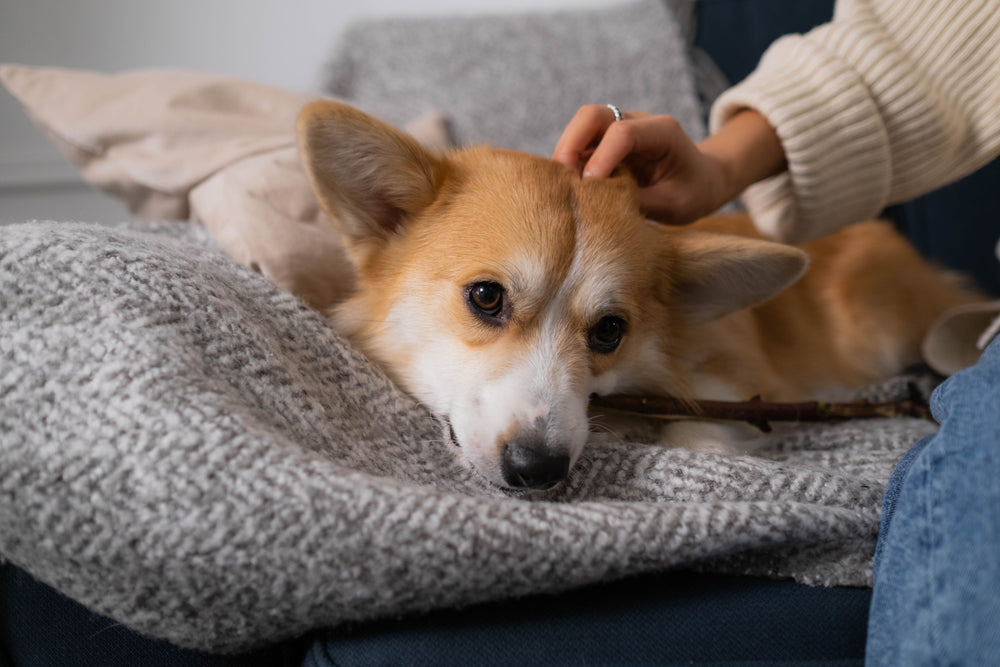
Dog ear infection. Soothe the ear, treat the cause.
Otitis externa is an inflammation of the ear canal, very common in dogs. In a UK study, more than 7 in 100 dogs seen at veterinary clinics had an ear…
Read the article -

Dog diarrhoea. Assess the situation, know when to see the vet.
Acute diarrhoea is common in dogs. In most cases it stays mild and clears up on its own or with simple care within a few days. Common causes are a…
Read the article -
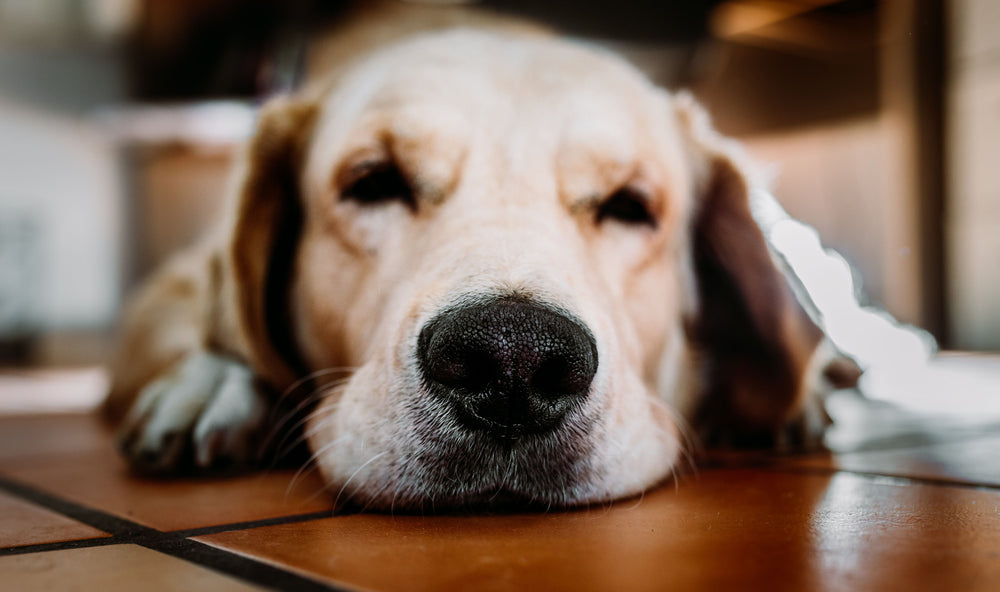
Allergies in dogs. Recognise the signs, find the cause.
In dogs, an allergy shows up mostly through the skin: itching, paw licking, redness, and repeated ear or skin infections. There are three main families: the reaction to flea saliva,…
Read the article -
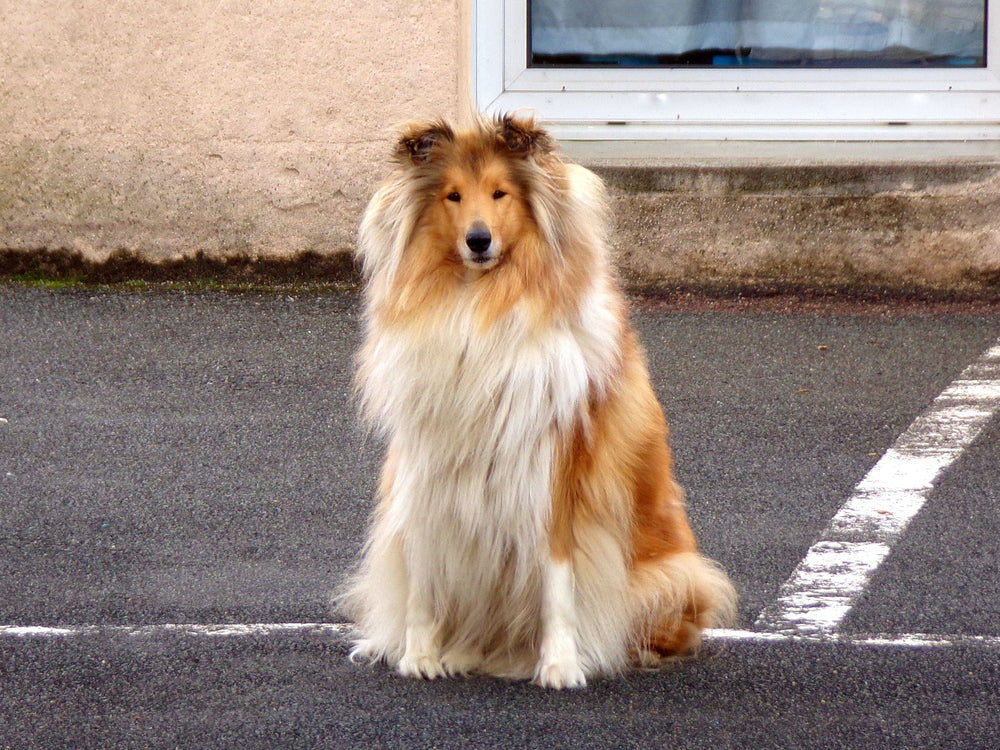
Dog hair loss. Normal shedding or warning sign.
Losing hair is normal for a dog: his coat renews itself constantly, with peaks of shedding in spring and autumn in many breeds. Normal shedding does not leave gaps in…
Read the article -

Warts on dogs. Tell the harmless from the worrying, know when to see the vet.
True warts in dogs are papillomas, small benign growths caused by a canine papillomavirus. They mostly affect young dogs, in the mouth, on the lips or on the face. In…
Read the article -
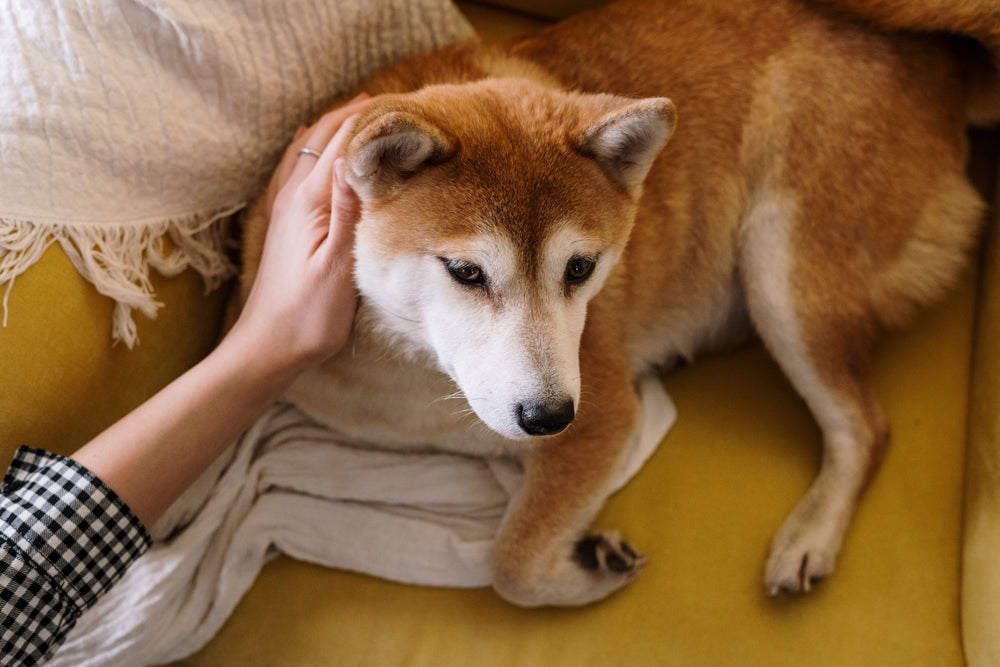
Dog hot spots. Soothe the sore, find what is making him itch.
A hot spot, or pyotraumatic dermatitis, is a red, wet, oozing sore that appears suddenly and spreads fast. The dog causes it himself, by scratching, licking or chewing to relieve…
Read the article


Free quiz · 2 minutes
Choosing a breed means choosing a way of life. Seven questions to find yours.
Our articles cite their sources. They are for information only and do not replace advice from a vet.