In summer, when you are enjoying an ice cream outside a café, it is hard to resist your dog's pleading stare. Should you share? Better not: ice cream made for us does not suit his body, and some can even be dangerous. Don't worry, though, your dog is not condemned to watch: there are simple homemade, fruit-based ice treats that suit him far better. This article adds to our guide to dog treats.
Can dogs eat ice cream?
It is not recommended. Ordinary ice cream is not toxic in itself, but it brings together several ingredients dogs tolerate badly: milk, lots of sugar and often lots of fat. Some recipes also contain ingredients that are downright dangerous.
If your dog licks a little plain vanilla ice cream, it is not usually a problem: some dogs tolerate a small amount, as a one-off. But it is not a treat to offer him.
Why ordinary ice cream doesn't suit dogs
Lactose. Many dogs are lactose intolerant, an ability that can be lost with age: milk-based treats can then cause digestive upsets[1]. Depending on the degree of intolerance, this ranges from diarrhoea and vomiting to tummy pain and wind.
Sugar. Ice cream is loaded with it. Sugar encourages weight gain, obesity and dental problems.
Fat. High-fat dairy products can trigger pancreatitis, a painful inflammation of the pancreas.
Allergies. Some dogs are allergic to milk proteins, which can show as vomiting, diarrhoea or itching.
Escape instinct
Always know where he is. Live, the moment you look for him.
GPS + Galileo accurate to 5 m, a virtual fence with alerts, Europe-wide coverage. The tracker is 49 €, plus the subscription, from 13,99 €/month.
Discover the tracker
Ice creams that are dangerous for dogs
“Sugar-free” or “light” ice creams. Any ice cream containing xylitol is considered very dangerous for dogs. This sweetener can make his blood sugar drop suddenly and, in large doses, damage his liver. Always check the label, and read our article on xylitol and dogs to learn how to spot it.
Risky flavours. Chocolate, raisins (including rum and raisin) and nuts are off limits. Chocolate ice cream in particular must not be given to a dog: the risks are explained in our article on chocolate and dogs.
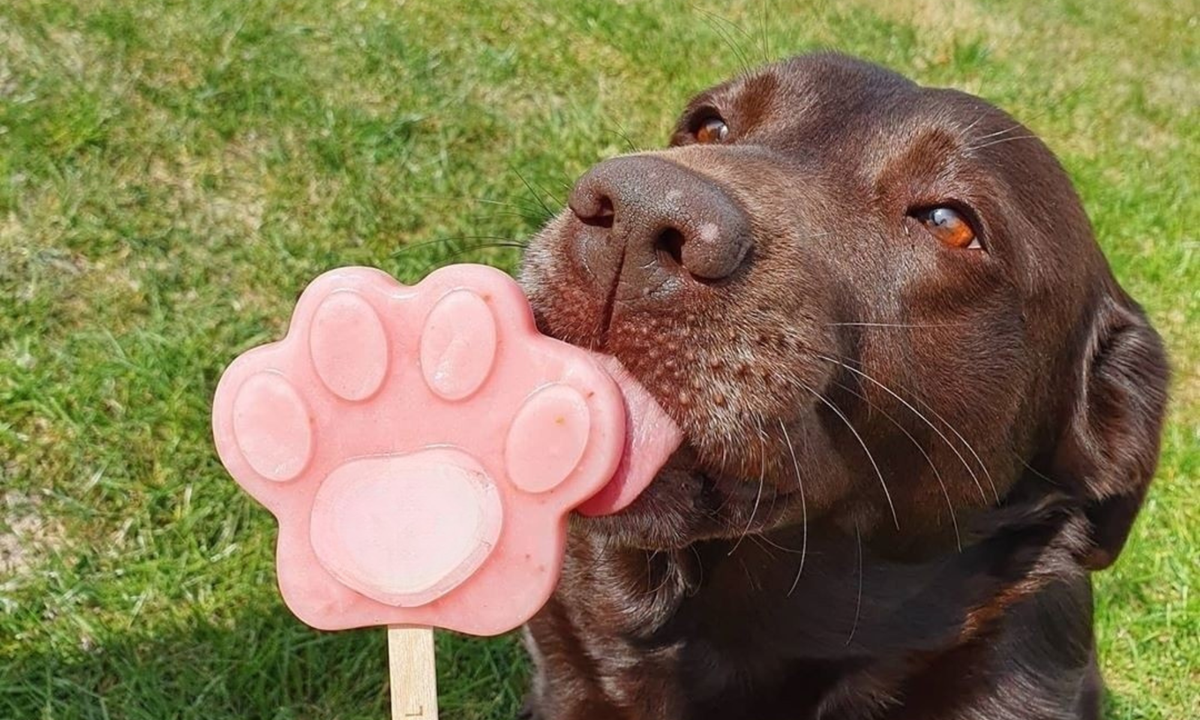
Our homemade fruit ice treats
The good news is that it is easy to make suitable frozen treats from fruit and vegetables that dogs can eat.
1. Banana “ice cream”. Blend two very ripe bananas, then put them in the freezer. Banana provides potassium, vitamin B6, vitamin C and fibre, but it is sweet: give it in moderation[2].
2. Watermelon ice treats. Blend watermelon flesh without pips or rind, pour into an ice cube tray or silicone mould, then freeze. For a creamier version, you can blend it with a little plain yoghurt. You will find our advice in our article on watermelon for dogs.
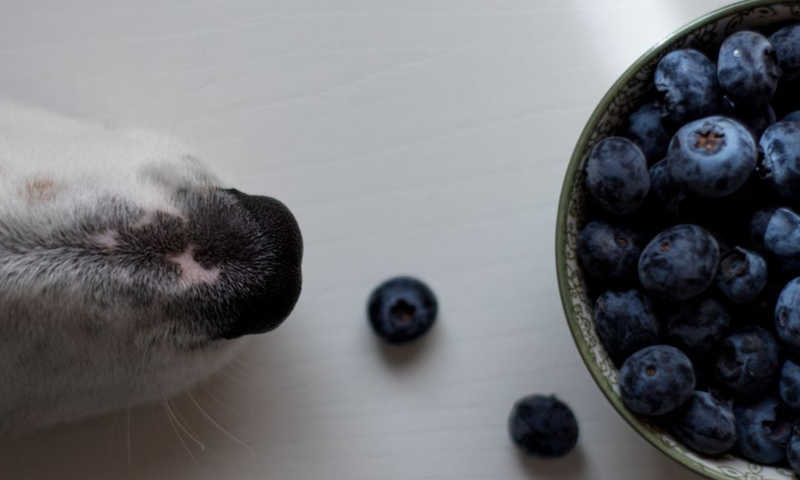
3. Frozen blueberries. Quite simply: a few plain blueberries, popped in the freezer. Cut them up for small dogs. Portions by weight are given in our article on blueberries and dogs.
4. Frozen cucumber slices. Very low in calories, they are ideal for dogs watching their waistline. See our article on cucumber and dogs.
Our other frozen recipes
For some variety, here are four more recipes, easy to make with dog-friendly ingredients. Measurements in “cups” correspond to about 240 ml.
Frozen chicken and carrot bites
Ideal for dogs who prefer meat to fruit. The chicken must be well cooked, boneless, skinless and unseasoned: garlic and onion, common in prepared dishes, are toxic to dogs[5].
- Ingredients: 2 cups of plain cooked chicken breast, ¾ cup of fat-free plain yoghurt, 1 carrot.
- Method: chop the chicken very finely and grate the carrot, mix with the yoghurt, pour into ice cube trays and freeze. For small dogs, put small dollops of the mixture on a tray lined with baking parchment before freezing.
Yoghurt, blueberry and strawberry lollies
A colourful, refreshing recipe. Like all fruit, strawberries contain natural sugar: give them in moderation[4].
- Ingredients: 1 cup of blueberries, ½ cup of chopped strawberries, 1 cup of plain yoghurt.
- Method: mix gently, pour into an ice cube tray or mould, and freeze for at least 4 to 5 hours.
Frozen pumpkin and banana lollies
Pumpkin is given plain: choose 100% pumpkin purée, never pie filling, which is sweetened and spiced.
- Ingredients: 1 tin of plain pumpkin purée, about 1 cup of unsweetened plain Greek yoghurt, 1 mashed banana.
- Method: mix everything, pour into silicone or plastic moulds, and freeze.
Broth ice cubes
A simple idea to tempt dogs who don't drink much.
- Ingredients: a homemade chicken broth, cooked without salt, onion or garlic.
- Method: pour into an ice cube tray and freeze. You can also add a little to his water or his kibble.
- Watch out: most shop-bought broths and stock cubes contain salt, onion or garlic. We explain why these ingredients are dangerous in our article on onions and dogs.
A tip to keep him busy: slip a frozen cube into a treat-dispensing toy. Your dog will take longer to enjoy it, which keeps him occupied in hot weather.
For all these recipes, the rules stay the same: yoghurt only if your dog tolerates dairy, no sweeteners, portions suited to his size, and your vet's advice if your dog has health problems or a sensitive stomach.
What about shop-bought dog ice cream?
You can now find ice creams made for dogs, often low in sugar and based on ingredients such as banana, pumpkin or peanut butter. They can be a convenient alternative. As with any shop-bought treat, read the ingredients list, check there is no sweetener and take account of the calories shown on the pack.
How much can you give?
Whether homemade or shop-bought, frozen treats count towards the limit of 10% of your dog's daily calories, along with every other reward of the day[3]. According to WSAVA, that works out at around 32 kcal a day for a 6 kg dog and 79 kcal for a 20 kg dog.
Offer them in small portions suited to your dog's size, and supervise him. A homemade ice treat does not replace water: a bowl of fresh water should always be within his reach, especially in hot weather.
The ice cream you enjoy at a café table is not made for your dog: lactose, sugar, fat, and sometimes xylitol or chocolate. But a few minutes is all it takes to make him a frozen treat from banana, watermelon, blueberries or cucumber. He gets his ice cream, and you get peace of mind.