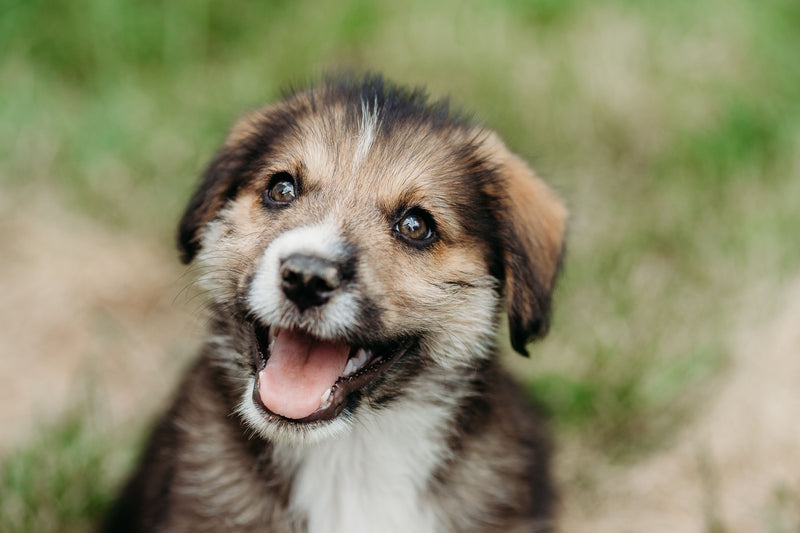
- A puppy that bites and mouths is not being aggressive: he is playing, exploring and soothing his gums. It is a normal stage.
- The aim is to teach him that human skin is delicate, then to stop putting his teeth on you at all.
- When he mouths: end the game calmly and offer a toy. Never punish him physically.
- In most puppies, mouthing drops off noticeably between 3 and 5 months.
Tiny needle teeth, scratched hands, socks attacked every time you walk past... The first weeks with a puppy often go through this phase. Take heart: your puppy is not trying to hurt you, and this is a behaviour you can teach him out of. Here is why he mouths, how to teach him to be gentle, and when to ask for help.
Why does my puppy bite and mouth?
He explores with his mouth
A puppy discovers the world with his mouth, the way a toddler does with their hands. Mouthing is part of his play and development, not aggression.
He plays as he did with his littermates
With his brothers and sisters, he played by nibbling. When one bit too hard, the other yelped and the game stopped: that is how he began to learn to control the force of his jaw. This is called bite inhibition. Your role is to carry on that learning with people[2].
He is teething
Between about 3 and 6 months, his baby teeth fall out and his adult teeth come through. Chewing soothes him. To find out more about this period, read our article on puppy baby teeth.
He is tired or overexcited
This is one of the most common causes, and the least well known. A tired puppy, or one who is too wound up after play, gets more irritable and mouths more[1]. A puppy needs a great deal of sleep: build quiet rest periods into his day.
How do I teach him to stop mouthing?
1. Give him something to chew
Always keep a toy within reach. As soon as he heads for your fingers, wiggle the toy to draw his attention to it. Long toys and tug ropes let you play without your hands being in the firing line.
2. End the game as soon as teeth touch skin
When he bites too hard, the game stops. Keep your hand still, turn away and ignore him for a few seconds. If he starts again, move away or leave the room for a short while, 30 to 60 seconds is enough, then pick the game up again calmly[2]. He soon understands that teeth on skin bring the fun to an end.
Some people advise letting out a small high-pitched yelp, as another puppy would. In some puppies this works; in others it winds them up even more. Watch your puppy: if the yelp sets him off again, simply stop, in silence.
3. Raise the bar gradually
Start by reacting to hard bites. When those become rare, react to lighter pressure too, until he no longer puts his teeth on you at all.
4. Prevent rather than cure
- Plan regular naps and calm moments, especially after play.
- Avoid rough-and-tumble games with your hands: choose a game of fetch or tug instead.
- Give him activities that tire his mind: chew toys, treat-hunting games.
- Make sure the whole family applies the same rules, children included.
Escape instinct
Always know where he is. Live, the moment you look for him.
GPS + Galileo accurate to 5 m, a virtual fence with alerts, Europe-wide coverage. The tracker is 49 €, plus the subscription, from 13,99 €/month.
Discover the tracker
Mistakes to avoid
- Punishing him physically (a tap on the nose, scruffing him): it can frighten him, increase the biting, and even make bites more likely over time[3].
- Scolding him: he may lose trust in you without understanding what is expected of him.
- Snatching your hands away or waggling your fingers in front of him: to a puppy, that is an invitation to grab.
- Using his crate as a punishment: it should stay a refuge.
- Letting it go “because he's small”: mouthing tolerated at 2 months becomes far more of a nuisance at 6 months.
Until what age does a puppy mouth?
For most puppies, mouthing drops off noticeably between 3 and 5 months[1], as teething ends and training takes effect. Every puppy goes at his own pace: some mouth for longer, until the teething is over. Consistency matters more than anything.
Play or aggression: how can you tell the difference?
A puppy at play has a loose body, a relaxed face, and comes back to you. A puppy that is scared or angry often has a stiff or frozen body and curled lips, he growls, and his bites are much harder than in play[3].
Growling during play can be normal. If, however, your puppy growls when someone approaches his bowl or his toys, freezes, or bites without playing, talk to your vet, then get support from a dog trainer or behaviourist. To understand this behaviour better, read our article on the dog that growls.
Mouthing, a stage in his training
Learning to control his mouth is one of his first lessons, alongside toilet training or his name. The same principles will serve you from here on: reward what he does well, stay calm, be consistent. Find all his first lessons in our guide to puppy training.